For over eighty years, the American Association for State and Local History (AASLH) has presented Leadership in History Awards to establish and encourage standards of excellence in the collection, preservation, and interpretation of state and local history in order to make the past more meaningful to all people.
Today, AASLH announces the winners of the History in Progress awards. The History in Progress (HIP) Award is a special additional award for an Award of Excellence winner whose nomination is highly inspirational, exhibits exceptional scholarship, and/or is exceedingly entrepreneurial in terms of funding, partnerships, or collaborations, creative problem solving, or unusual project design and inclusiveness. This is an award made at the discretion of the Awards Committee.
The 2026 Albert B. Corey Award winner was previously announced. The rest of the Awards of Excellence winners will be announced later this week.
History in Progress Awards
The History in Progress Award is a special recognition for winners that are particularly inspiring and creative, and is only given to 5 percent or fewer of the total awardees per year. This year, two engaging projects rose to the top.
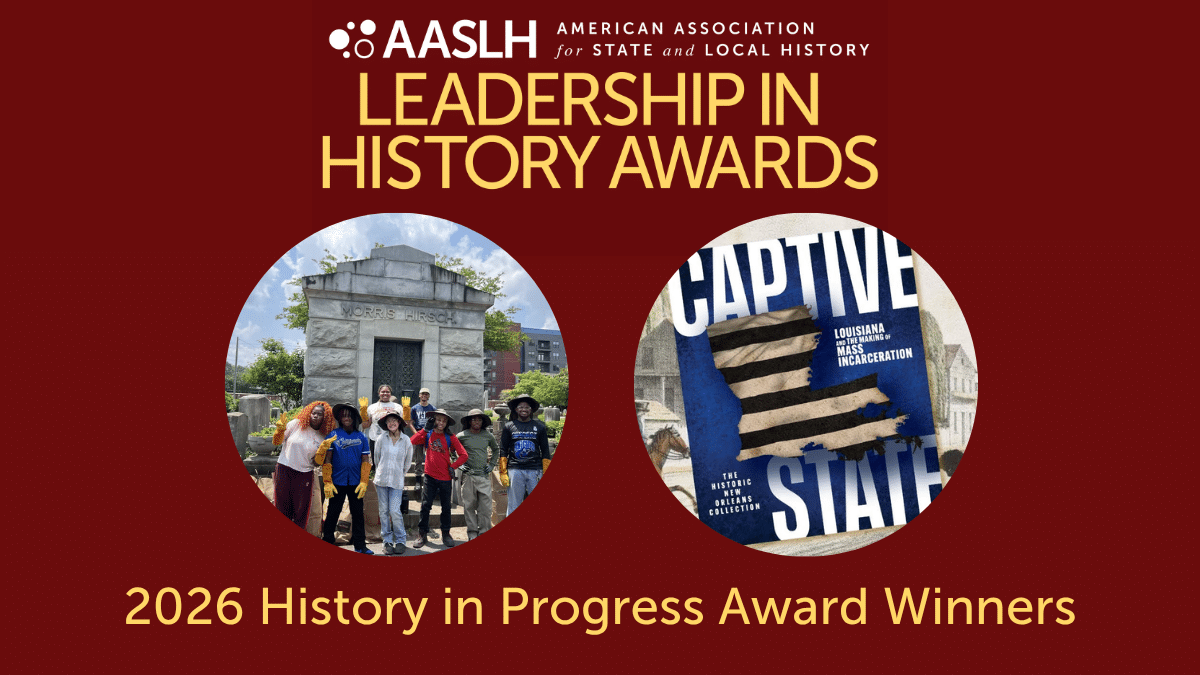
Historic Oakland Foundation (Atlanta, Georgia), for Oakland Roots Academy
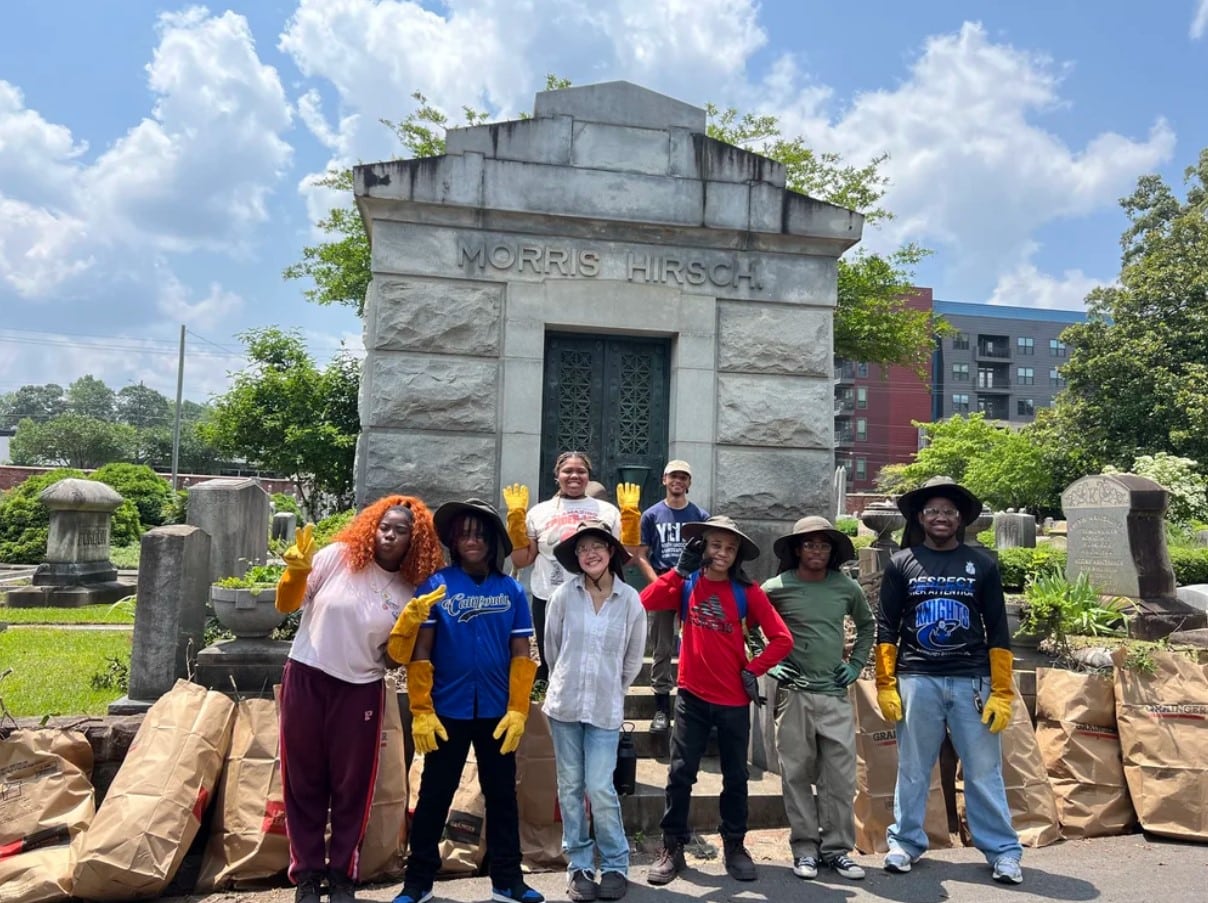
Historic Oakland Foundation (HOF) is committed to preserving and restoring historic Oakland Cemetery, one of Atlanta’s most significant historic and cultural landscapes. Over the past three years, HOF has expanded this mission through a youth workforce development initiative designed to equip Atlanta-area high school students with practical job skills and meaningful exposure to career pathways through work on historic cemetery landscapes and hardscapes. Formerly known as the Youth Landscape and Hardscape Team, and now as Oakland Roots Academy (ORA), the program has grown substantially in both participation and scope with over 30 participants thus far, becoming a cornerstone of HOF’s growing educational programming. The youth workforce development initiative now functions as a training program and as an evolving study project designed to strengthen the field of workforce development at historic sites.
Oakland Roots Academy is a paid, eight-week, hands-on training program for students attending Title I high schools—an audience chosen to ensure that opportunities reach students who benefit most from accessible workforce development. Students work alongside Oakland’s Horticulture and Preservation teams, learning horticulture practices as they care for the historic landscape or developing preservation and masonry skills while maintaining hardscape features. Students directly contribute to the stewardship of one of Atlanta’s most historic sites while exploring career pathways in green space design, historic preservation, and community development. These partnerships broaden students’ understanding of the professional landscape and reinforce the program’s goal of cultivating long‑term career readiness.
Historic New Orleans Collection (New Orleans, Louisiana) for Captive State: Louisiana and the Making of Mass Incarceration
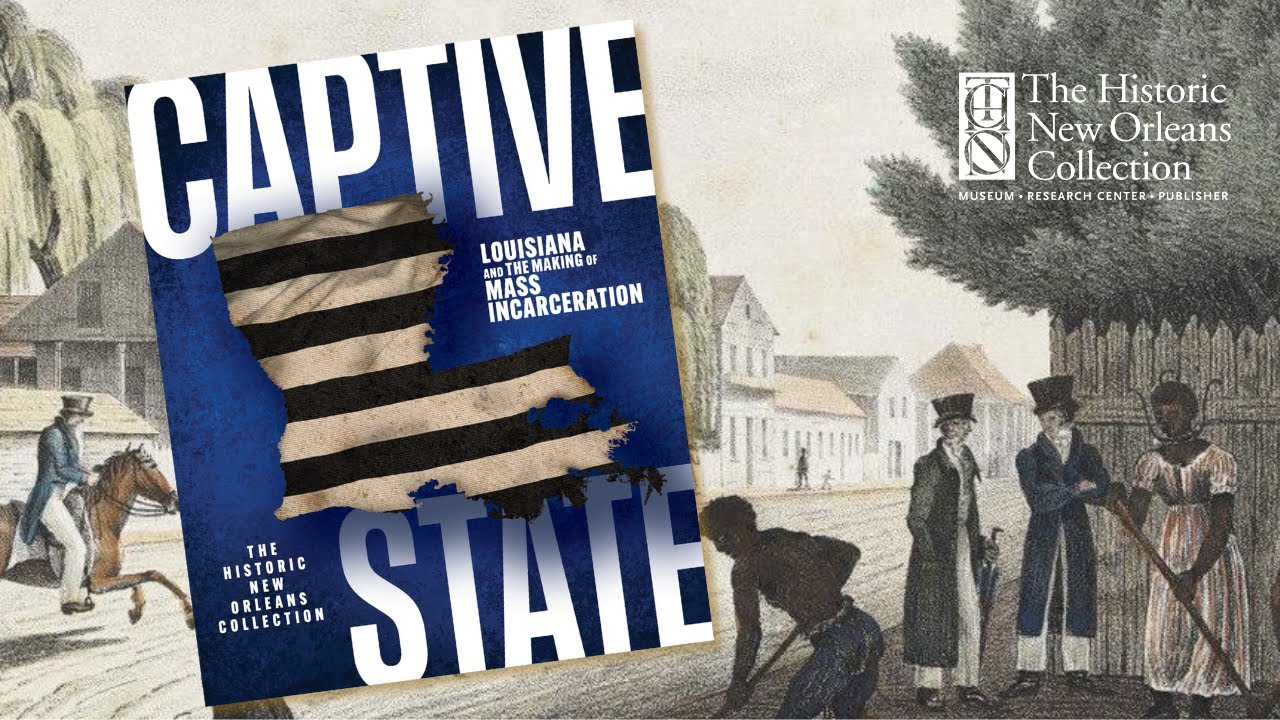
Captive State: Louisiana and the Making of Mass Incarceration was the culmination of a six-year effort to create an accessible public history exhibition examining mass incarceration through a historical lens. Spanning more than 300 years across four galleries, the exhibition explored five interpretive themes: forced labor; the targeting of people of African descent; torture as a tool of control; the increasing invisibility of incarceration; and the fact that systems of slavery and incarceration are intentionally constructed, not incidental. The exhibition confronted New Orleans’s history as the largest market in the domestic slave trade, as well as Louisiana’s status as one of the most incarcerated places in the world. Through a compelling blend of historical objects, interpretive text, multimedia, and data visualization, Captive State revealed the deeply rooted connections between slavery and mass incarceration.
After seeing Captive State, the Borealis Foundation pledged $100,000 to support the exhibition and the production of a related book (released October 1, 2025) that preserves scholarly insights and provides a resource for researchers and students through an in-depth exploration of the exhibition’s themes, detailed images of the displayed objects, and a bibliography for further research. The book has extended the impact of the project, preserving the scholarship and anchoring public programming that has continued into 2026. Captive State received the John Thompson award from Innocence and Justice Louisiana, who called it a “mind- and heart-opening exhibition. . . . By involving the communities impacted by mass incarceration and those working to end it, [the] approach was imaginative and unconventional.” Most recently, Captive State was honored as the 2026 Louisiana Endowment for the Humanities Exhibition of the Year.