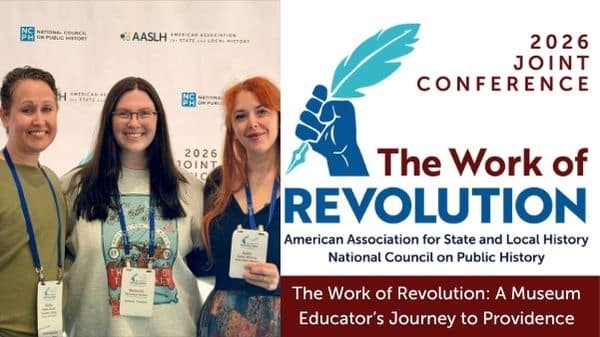
By: Neecole A. Gregory, M.A., Museum Director, Morton Museum of Collierville History, Collierville, TN
Reflecting on the recent AASLH/NCPH Joint Conference in Providence, Rhode Island, I am struck by how uniquely revitalizing the experience was for a small-museum professional. Having previously navigated the sprawling convention halls at AAM twice in both Los Angeles and Philadelphia and ICOM in Prague once, I can confidently say that this joint gathering captured some of the absolute best vibes of the museum conferences I have attended. There was an authentic, grounded warmth in the air that often gets lost at massive national gatherings. I found myself casually chatting with a first-time undergraduate intern, an energetic volunteer, and a veteran executive director. The dialogue flowed freely and without pretension. No one was guarded, and the willingness to exchange candid advice across all career stages fostered an immediate sense of camaraderie.
The choice of host city contributed significantly to that accessible, welcoming atmosphere. As a native of the DMV, I deeply appreciated the regional connectivity and straightforward navigation of Providence. One of the greatest hurdles with major industry conferences is that they are so frequently hosted in hyper-expensive tier-one cities where lodging alone exhausts an entire annual professional development budget. While Rhode Island certainly features high-end tourist destinations, Providence served as a walkable, budget-conscious focal point. Its reliable commuter rail and regional transit network made it effortless to branch out, visit historic sites across the state, and absorb New England’s layered public history without further financial strain.
Beyond the logistics, the session curation felt like an answer to a long-standing need. Large-scale conferences often favor presentations on six-figure interactive gallery overhauls or programming sustained by an army of specialized personnel. While inspiring, those case studies rarely translate to the everyday reality of small community institutions balancing tight budgets and lean teams. The AASLH/NCPH program offered an exceptionally diverse slate of scalable, plug-and-play sessions. Presenters shared resourceful, low-cost community engagement projects, realistic collections care methods, and sustainable partnership frameworks that can be directly adapted and implemented back home without requiring a windfall of funding and man-hours.
That commitment to institutional scalability extended seamlessly onto the exhibit hall floor. Walking vendor aisles can easily become disheartening when products, archival equipment, and digital software systems are engineered exclusively for institutions with deep pockets. In Providence, however, the vendors offered practical, flexible services tailored to organizations of varying sizes and resources. Being able to have transparent, productive conversations with vendors who truly understand the creative agility and fiscal realities of small museums made browsing the floor an empowering, rather than alienating, experience. Nothing flares up my imposter syndrome more than speaking with a vendor who sees my title as “museum director” and assumes I am the gatekeeper to a multi-thousand-dollar score for their commission.
Ultimately, leaving Providence, I felt not only professionally recharged, but equipped with actionable tools to strengthen my institution’s daily work. The AASLH/NCPH Joint Conference succeeded because it recognized that public history thrives at the grassroots level, providing a generous, inclusive platform where museum workers of all backgrounds and from institutions of all sizes can genuinely learn from one another.