Catherine W. Zipf, Director, Bristol Historical & Preservation Society
America’s Revolutionaries fought for self-determination and self-rule, but what about those who were enslaved?
Recent research on the history of enslavement in Bristol, RI, offers an intriguing window into the mechanics of urban slavery in the American north. Located along Narragansett Bay about halfway between Providence and Newport, the town was founded in the wake of King Philip’s War on sacred homelands of the Pokanoket tribe. The enslaved, including many Native and Pokanoket people, were present in Bristol at its founding in 1680, occupying many of the houses that still stand on its streets today.
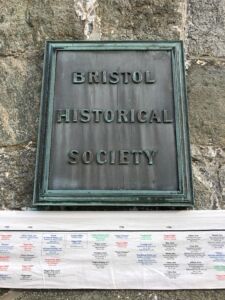
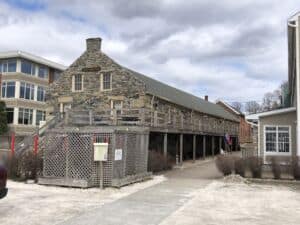
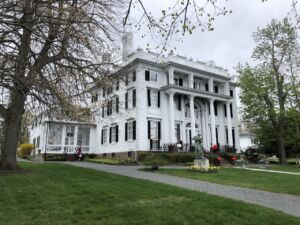
After the American Revolution, the Bristol-based DeWolf family built a commercial empire based on trading in enslaved people and slave-produced commodities. From about 1769 to 1820, James DeWolf and his extended family brought approximately 11,000 enslaved Africans across the Middle Passage. Evidence of these activities, along with that of the enslaved people who were forced to participate in the trade, is readily apparent in the town’s architecture and infrastructure. The historic DeWolf warehouse still stands, as does Linden Place Museum, which was constructed by George DeWolf in 1810 using the proceeds of a single slaving voyage.
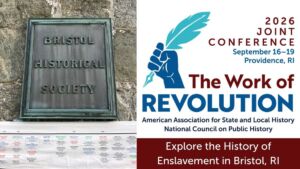
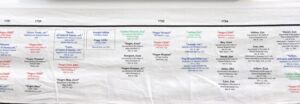
Striving to tell the stories of the Town’s often unknown enslaved people, the Bristol Historical & Preservation Society won an AASLH Leadership in History Award for their efforts in 2023 for The Timeline of Enslavement in Bristol, RI. Funded by the Rhode Island Council for the Humanities and by a local anonymous donor, The Timeline is a 56-foot-long strip of fabric that lists in chronological order the names of those who were enslaved in Bristol between 1680 and 1808. All those identified occupy their own space on the timeline, regardless of how much or little is known about them. The approximately 600 entries represent approximately 475 enslaved individuals in total.
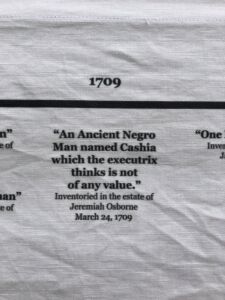
The Timeline was born from the desire to tell the history of enslavement in Bristol in a way that broke long-standing barriers that have blocked this history from being told or encouraged its misinterpretation. The timeline format was a deliberate choice designed to present facts that were both indisputable, such that the deniers could no longer deny, and minimally interpreted, so as to empower those wanting to tell their own story.
The Timeline is frequently seen in prominent public spaces in Bristol and is available for display upon request. A video version can be viewed on the BH&PS’s website.
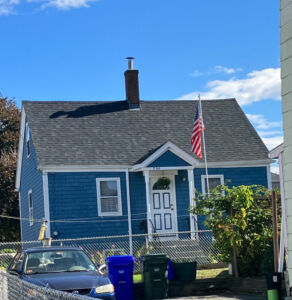
The story of Black people in Bristol encompasses more than enslavement. Early in the 19th century, free Blacks, many descendants of Bristol’s enslaved population, formed a neighborhood located just outside the Town’s original plan. Known as “New Goree,” this community and its major landmarks, such as the York Usher House, the Maria Hazard House, and the first African Church site, are still extant and await further research.
To learn more about this ongoing research, join the Bristol Historical & Preservation Society for a tour during the AASLH/NCPH Joint Conference on Saturday, September 19. The tour begins conceptually at Bristol’s founding, with participants walking through the town’s historic plan to stop at sites where enslaved people are known to have lived and worked from the town’s founding to the American Revolution. The second part of the tour immerses participants in the post-Revolutionary-DeWolf period with visits to two former distillery sites, the historic DeWolf warehouse complex, and Linden Place Museum. The last part of the tour will focus on New Goree, a community created outside the town’s boundaries by free descendants of Bristol’s enslaved community. Time permitting, the tour will conclude with a visit to the Bristol Middle Passage Port Marker Memorial, which honors those who were enslaved in Bristol.
To register for the Joint Conference and this tour, visit https://aaslh.org/annualconference/2026-annual-conference/.